
Like Rudi Diels, Tim Moriau is not a classic club trainer. He is affiliated with OEH, but his athletes are in clubs all over the country; a Dutchman, a Frenchman and a Dane are also part of his training group. He could only accompany Isaac Kimeli/OEH and Simon Debognies/OEH, who like him live in Halle, in person. Everything else had to be done from a distance.
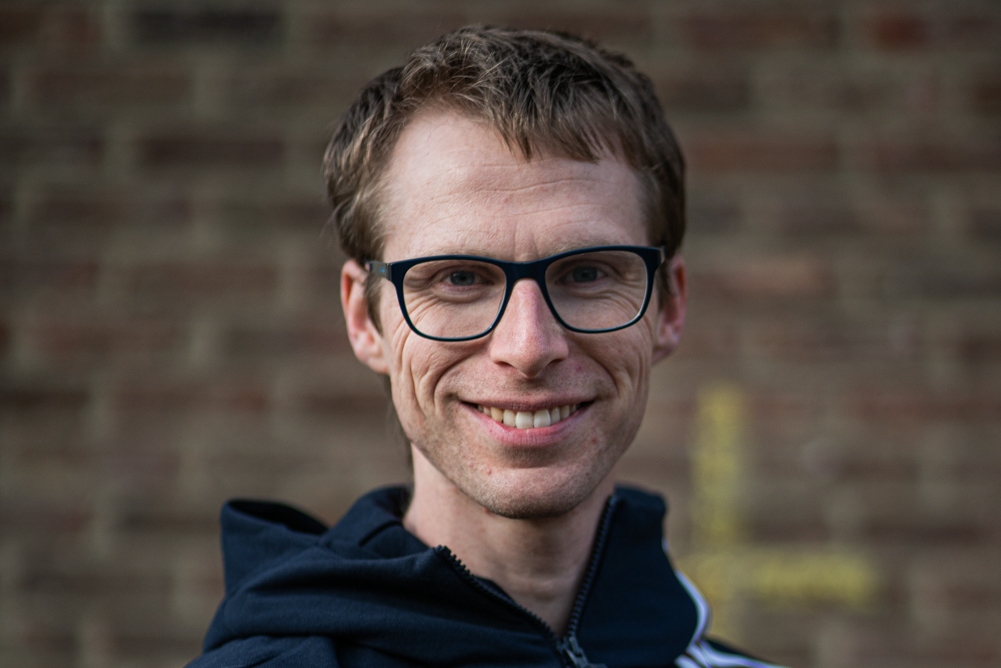
"At first I was still somewhat naïve and thought we would still be able to go to the United States on an internship despite the virus," says Tim. "That America closed its borders, we remained somewhat naïve and thought we would still be able to go to South Africa or somewhere in Europe on an internship, but in the end it quickly became clear that it was becoming a serious crisis. All in all, we quickly switched to a program at home, with a little less quality training because the important game at Stanford was cancelled, but otherwise we just continued the line as planned." The group event - though that is what Tim's Runners' Lab Athletics Team is known for - was soon discontinued. "Already on March 12, before it became mandatory, we canceled the group training, also because I myself had been on a ski trip just before. Everyone had to train at home nearby, no one could have contact anymore. At first the athletes grumbled and asked why it had to be so drastic, but in the end everyone went along with it. With distance runners it is fortunately a little easier to coach from a distance than with other disciplines."
Only Isaac and Simon were still seeing Tim face-to-face. "At first it was just Isaac, then I added Simon, with mouth mask. Somehow, with all due respect to the victims, it was nice to give another quiet training to just two athletes. In recent years my group has grown very large, but now it was back to basics with the two athletes it all started with." Everything else had to be done over the phone or online. "The first two weeks were extremely busy, then I was constantly hanging on the phone and I was more psychologist than trainer for all the athletes who saw their races cancelled. Athletes cling to their goals, but when Tokyo and Paris fell away it became more difficult. Still, I always try to put a carrot in front of my athletes that will keep them motivated: a race in August or a European Cross Country Championship in the fall, for example. If you take elites, youth and recreational together, I coach about 60 athletes, so a lot of schedules had to be adjusted and goals adjusted." For the elite athletes in Tim's group, relatively little has changed on the training front. "They're at a level and can't let that slide. Also, they have to do enough solid aerobic power sprints, otherwise their resistance capacity rises and too sharply and you can't have that as a distance runner. The weekly volumes have remained the same, we just do a little less specific work because there are no limits to be met. I am happy to note, though, that all the athletes were able to fall back on their intrinsic motivation also continued to train because they enjoy it and running adds value to their lives."
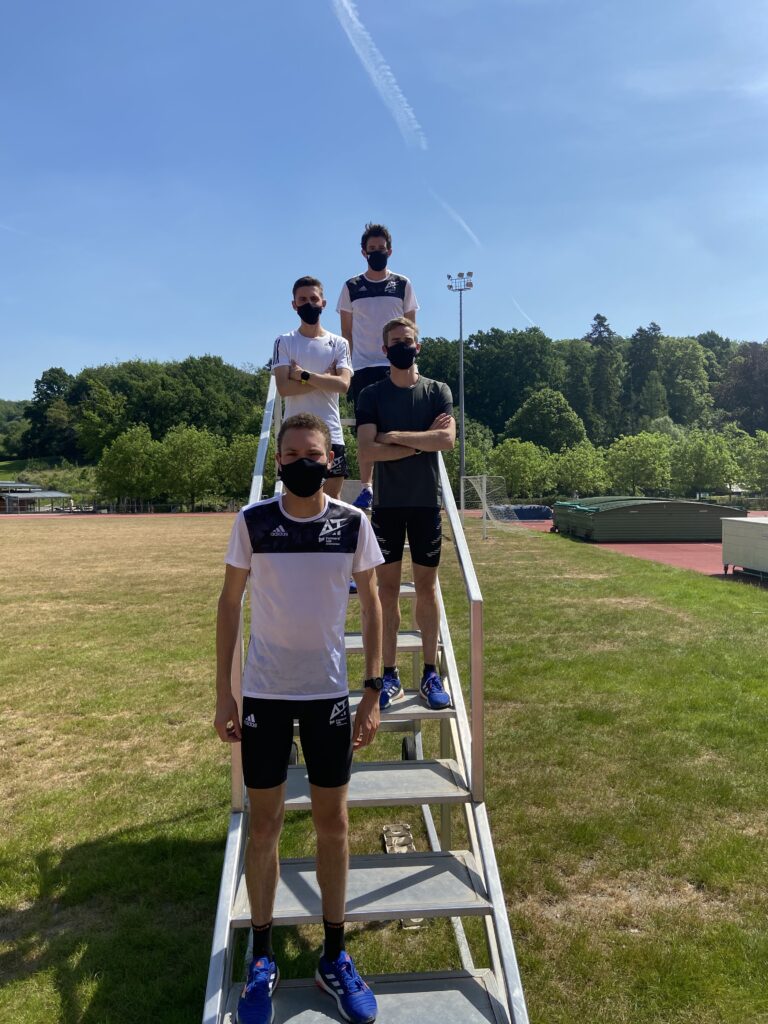
The workouts, which thus continued more or less as normal albeit individually, yielded results. "Last week we were able to take lactate tests with mask and gloves again for the first time. Most of the athletes made great strides, almost everyone ended up with a VO2max above 70, some even above 80. The athletes have accepted the situation and see the opportunities. My role is to make them see those." Nice results in a test are one thing, but athletes naturally also want to prove themselves in competition. "For them, it's all about the competitions, but I see it this way: come competitions this summer, that's a nice bonus, but for now it's all about getting stronger. Almost all my athletes are young, Isaac is even one of the older ones, so everyone can still make serious strides."
Even apart from the conditioning, Tim sees benefits to the situation. "My athletes have learned things from this, for example the added value of our group training. They see that now more than ever. Last week we had first small group training, and everyone was happy. The athletes also see now that life as an athlete is quite beautiful. That is also what I try to convey: not only the performance, but also the whole process leading up to it is beautiful to experience." That process, by the way, even now, looks different for a coach working across clubs. "With top athletes, you enjoy a little more prestige, so you get a little more done and already have access to a track once. One disadvantage is that I had to make arrangements with not one, but a dozen clubs to get my athletes on slopes. In the end, we did find a solution for most of them."
Another disadvantage: coaching is Tim's profession and so he suffered financial losses. "Contact was forbidden and so I couldn't always practice my profession, that caused a loss. I coach people in companies that usually work toward marathons, but they were canceled. Some companies dropped out, fortunately one big company just extended the cooperation into the fall. So my losses are limited. The main question for me is what will happen in the future, more likely it will become even harder to make a living from athletics. Meetings are going to be able to pay athletes less, the same goes for big sports brands. So we may have big question marks over our sport in the coming years. Fortunately, we have made some solid multi-year deals with our team that will allow us to continue for a while."
On the health front - nor always much more important than athletic results or financial gain - Tim's team fortunately experienced few problems with the coronavirus. "We had one infection in mid-March, but fortunately it only lasted two days. Later someone very close to our group was infected, but even there it wasn't too bad. Furthermore, there are few cases around our team. If you add up all the partners and parents of our athletes you soon come to 300 people, then two infections is not too bad."